Coursera Courses
Earn Coins on World-Class Courses
Browse thousands of courses from top universities like Wharton, Stanford, MIT & more. Sign up for the free trial and explore a course from a top university.
195
Courses
8
Categories
Free Trial
Available on all courses
1Find a course you love
2Sign up for the FREE trial
3Coursera handles billing directly
All
Business & Finance
Technology & Coding
Arts & Design
General
Health & Medicine
Social Sciences
Science & Engineering
Language Learning
Sort:
 COURSE
FREE TRIAL
Technology & Coding
COURSE
FREE TRIAL
Technology & Coding
University of Colorado Boulder
Dynamic Programming, Greedy Algorithms
This course covers basic algorithm design techniques such as divide and conquer, dynamic programming, and greedy algorithms. It concludes with a brief introduction to intractability (NP-completeness) and using linear/integer programming solvers for solving optimization problems. We will also cover some advanced topics in data structures. This course can be taken for academic credit as part of CU Boulder’s MS in Data Science or MS in Computer Science degrees offered on the Coursera platform. These fully accredited graduate degrees offer targeted courses, short 8-week sessions, and pay-as-you-go tuition. Admission is based on performance in three preliminary courses, not academic history. CU degrees on Coursera are ideal for recent graduates or working professionals. Learn more: MS in Data Science: https://www.coursera.org/degrees/master-of-science-data-science-boulder MS in Computer Science: https://coursera.org/degrees/ms-computer-science-boulder
BoostLyke may earn a commission when you enroll via this link. Affiliate disclosure.
Sign Up & Start Your FREE Trial
 COURSE
FREE TRIAL
Technology & Coding
COURSE
FREE TRIAL
Technology & Coding
University of Colorado Boulder
Ethical Issues in Data Science
Computing applications involving large amounts of data – the domain of data science – impact the lives of most people in the U.S. and the world. These impacts include recommendations made to us by internet-based systems, information that is available about us online, techniques that are used for security and surveillance, data that is used in health care, and many more. In many cases, they are affected by techniques in artificial intelligence and machine learning. This course examines some of the ethical issues related to data science, with the fundamental objective of making data science professionals aware of and sensitive to ethical considerations that may arise in their careers. It does this through a combination of discussion of ethical frameworks, examination of a variety of data science applications that lead to ethical considerations, reading current media and scholarly articles, and drawing upon the perspectives and experiences of fellow students and computing professionals. Ethical Issues in Data Science can be taken for academic credit as part of CU Boulder’s Master of Science in Data Science (MS-DS) degree offered on the Coursera platform. The MS-DS is an interdisciplinary degree that brings together faculty from CU Boulder’s departments of Applied Mathematics, Computer Science, Information Science, and others. With performance-based admissions and no application process, the MS-DS is ideal for individuals with a broad range of undergraduate education and/or professional experience in computer science, information science, mathematics, and statistics. Learn more about the MS-DS program at https://www.coursera.org/degrees/master-of-science-data-science-boulder.
BoostLyke may earn a commission when you enroll via this link. Affiliate disclosure.
Sign Up & Start Your FREE Trial
 COURSE
FREE TRIAL
Technology & Coding
COURSE
FREE TRIAL
Technology & Coding
University of Colorado Boulder
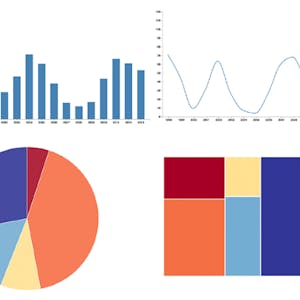
Fundamentals of Data Visualization
Data is everywhere. Charts, graphs, and other types of information visualizations help people to make sense of this data. This course explores the design, development, and evaluation of such information visualizations. By combining aspects of design, computer graphics, HCI, and data science, you will gain hands-on experience with creating visualizations, using exploratory tools, and architecting data narratives. Topics include user-centered design, web-based visualization, data cognition and perception, and design evaluation. This course can be taken for academic credit as part of CU Boulder’s MS in Data Science or MS in Computer Science degrees offered on the Coursera platform. These fully accredited graduate degrees offer targeted courses, short 8-week sessions, and pay-as-you-go tuition. Admission is based on performance in three preliminary courses, not academic history. CU degrees on Coursera are ideal for recent graduates or working professionals. Learn more: MS in Data Science: https://www.coursera.org/degrees/master-of-science-data-science-boulder MS in Computer Science: https://coursera.org/degrees/ms-computer-science-boulder
BoostLyke may earn a commission when you enroll via this link. Affiliate disclosure.
Sign Up & Start Your FREE Trial
 COURSE
FREE TRIAL
Technology & Coding
COURSE
FREE TRIAL
Technology & Coding
New York Institute of Finance
Future Development in Supply Chain Finance and Blockchain Technology
This course focuses on future developments in Supply Chain Finance such as Artificial Intelligence (AI) and Application Programming Interfaces (APIs). This course covers the basic concepts of Distributed Ledger Technology (DLT), the key features as well as the benefits the solution represents for Supply Chain Finance. This course concludes with an understanding of the applicability of Blockchain Technologies and how they impact Supply Chain Finance.
BoostLyke may earn a commission when you enroll via this link. Affiliate disclosure.
Sign Up & Start Your FREE Trial
 COURSE
FREE TRIAL
Technology & Coding
COURSE
FREE TRIAL
Technology & Coding
University of California San Diego
Genome Assembly Programming Challenge
In Spring 2011, thousands of people in Germany were hospitalized with a deadly disease that started as food poisoning with bloody diarrhea and often led to kidney failure. It was the beginning of the deadliest outbreak in recent history, caused by a mysterious bacterial strain that we will refer to as E. coli X. Soon, German officials linked the outbreak to a restaurant in Lübeck, where nearly 20% of the patrons had developed bloody diarrhea in a single week. At this point, biologists knew that they were facing a previously unknown pathogen and that traditional methods would not suffice – computational biologists would be needed to assemble and analyze the genome of the newly emerged pathogen. To investigate the evolutionary origin and pathogenic potential of the outbreak strain, researchers started a crowdsourced research program. They released bacterial DNA sequencing data from one of a patient, which elicited a burst of analyses carried out by computational biologists on four continents. They even used GitHub for the project: https://github.com/ehec-outbreak-crowdsourced/BGI-data-analysis/wiki The 2011 German outbreak represented an early example of epidemiologists collaborating with computational biologists to stop an outbreak. In this online course you will follow in the footsteps of the bioinformaticians investigating the outbreak by developing a program to assemble the genome of the E. coli X from millions of overlapping substrings of the E.coli X genome.
BoostLyke may earn a commission when you enroll via this link. Affiliate disclosure.
Sign Up & Start Your FREE Trial
 COURSE
FREE TRIAL
Technology & Coding
COURSE
FREE TRIAL
Technology & Coding
University of Pennsylvania
Introduction to Java and Object-Oriented Programming
This course provides an introduction to the Java language and object-oriented programming, including an overview of Java syntax and how it differs from a language like Python. Students will learn how to write custom Java classes and methods, and how to test their code using unit testing and test-driven development. Topics include basic data structures like Arrays and ArrayLists and overloading methods.
BoostLyke may earn a commission when you enroll via this link. Affiliate disclosure.
Sign Up & Start Your FREE Trial
 COURSE
FREE TRIAL
Technology & Coding
COURSE
FREE TRIAL
Technology & Coding
University of Toronto
Introduction to Self-Driving Cars
Welcome to Introduction to Self-Driving Cars, the first course in University of Toronto’s Self-Driving Cars Specialization. This course will introduce you to the terminology, design considerations and safety assessment of self-driving cars. By the end of this course, you will be able to: - Understand commonly used hardware used for self-driving cars - Identify the main components of the self-driving software stack - Program vehicle modelling and control - Analyze the safety frameworks and current industry practices for vehicle development For the final project in this course, you will develop control code to navigate a self-driving car around a racetrack in the CARLA simulation environment. You will construct longitudinal and lateral dynamic models for a vehicle and create controllers that regulate speed and path tracking performance using Python. You’ll test the limits of your control design and learn the challenges inherent in driving at the limit of vehicle performance. This is an advanced course, intended for learners with a background in mechanical engineering, computer and electrical engineering, or robotics. To succeed in this course, you should have programming experience in Python 3.0, familiarity with Linear Algebra (matrices, vectors, matrix multiplication, rank, Eigenvalues and vectors and inverses), Statistics (Gaussian probability distributions), Calculus and Physics (forces, moments, inertia, Newton's Laws). You will also need certain hardware and software specifications in order to effectively run the CARLA simulator: Windows 7 64-bit (or later) or Ubuntu 16.04 (or later), Quad-core Intel or AMD processor (2.5 GHz or faster), NVIDIA GeForce 470 GTX or AMD Radeon 6870 HD series card or higher, 8 GB RAM, and OpenGL 3 or greater (for Linux computers).
BoostLyke may earn a commission when you enroll via this link. Affiliate disclosure.
Sign Up & Start Your FREE Trial
 COURSE
FREE TRIAL
Technology & Coding
COURSE
FREE TRIAL
Technology & Coding
Alberta Machine Intelligence Institute
Machine Learning Algorithms: Supervised Learning Tip to Tail
This course takes you from understanding the fundamentals of a machine learning project. Learners will understand and implement supervised learning techniques on real case studies to analyze business case scenarios where decision trees, k-nearest neighbours and support vector machines are optimally used. Learners will also gain skills to contrast the practical consequences of different data preparation steps and describe common production issues in applied ML. To be successful, you should have at least beginner-level background in Python programming (e.g., be able to read and code trace existing code, be comfortable with conditionals, loops, variables, lists, dictionaries and arrays). You should have a basic understanding of linear algebra (vector notation) and statistics (probability distributions and mean/median/mode). This is the second course of the Applied Machine Learning Specialization brought to you by Coursera and the Alberta Machine Intelligence Institute.
BoostLyke may earn a commission when you enroll via this link. Affiliate disclosure.
Sign Up & Start Your FREE Trial
 COURSE
FREE TRIAL
Technology & Coding
COURSE
FREE TRIAL
Technology & Coding
New York Institute of Finance
Operational Risk Management: Frameworks & Strategies
In the final course from the Risk Management specialization, you will be introduced to the different roles in risk governance and the benefits of establishing an operational risk management program at your own workplace. This course will highlight key elements of an Operational Risk Management framework and help you identify the appropriate elements to incorporate in your own program. By the end of the course, you will be able to capture, report, and investigate operational risk events, produce meaningful key risk indicator (KRI) data and trend analysis, assess organizational risk appetite, and design an Operational Risk Control and Self-Assessment program. To be successful in this course, you should have a basic knowledge of statistics and probability and familiarity with business operations. Experience with MS Excel and Python recommended.
BoostLyke may earn a commission when you enroll via this link. Affiliate disclosure.
Sign Up & Start Your FREE Trial
 COURSE
FREE TRIAL
Technology & Coding
COURSE
FREE TRIAL
Technology & Coding
SAS
Practical SAS Programming and Certification Review
In this course you have the opportunity to use the skills you acquired in the two SAS programming courses to solve realistic problems. This course is also designed to give you a thorough review of SAS programming concepts so you are prepared to take the SAS Certified Specialist: Base Programming Using SAS 9.4 Exam.
BoostLyke may earn a commission when you enroll via this link. Affiliate disclosure.
Sign Up & Start Your FREE Trial
 COURSE
FREE TRIAL
Technology & Coding
COURSE
FREE TRIAL
Technology & Coding
Alberta Machine Intelligence Institute & University of Alberta
Prediction and Control with Function Approximation
In this course, you will learn how to solve problems with large, high-dimensional, and potentially infinite state spaces. You will see that estimating value functions can be cast as a supervised learning problem---function approximation---allowing you to build agents that carefully balance generalization and discrimination in order to maximize reward. We will begin this journey by investigating how our policy evaluation or prediction methods like Monte Carlo and TD can be extended to the function approximation setting. You will learn about feature construction techniques for RL, and representation learning via neural networks and backprop. We conclude this course with a deep-dive into policy gradient methods; a way to learn policies directly without learning a value function. In this course you will solve two continuous-state control tasks and investigate the benefits of policy gradient methods in a continuous-action environment. Prerequisites: This course strongly builds on the fundamentals of Courses 1 and 2, and learners should have completed these before starting this course. Learners should also be comfortable with probabilities & expectations, basic linear algebra, basic calculus, Python 3.0 (at least 1 year), and implementing algorithms from pseudocode. By the end of this course, you will be able to: -Understand how to use supervised learning approaches to approximate value functions -Understand objectives for prediction (value estimation) under function approximation -Implement TD with function approximation (state aggregation), on an environment with an infinite state space (continuous state space) -Understand fixed basis and neural network approaches to feature construction -Implement TD with neural network function approximation in a continuous state environment -Understand new difficulties in exploration when moving to function approximation -Contrast discounted problem formulations for control versus an average reward problem formulation -Implement expected Sarsa and Q-learning with function approximation on a continuous state control task -Understand objectives for directly estimating policies (policy gradient objectives) -Implement a policy gradient method (called Actor-Critic) on a discrete state environment
BoostLyke may earn a commission when you enroll via this link. Affiliate disclosure.
Sign Up & Start Your FREE Trial
 COURSE
FREE TRIAL
Technology & Coding
COURSE
FREE TRIAL
Technology & Coding
Alberta Machine Intelligence Institute & University of Alberta
Sample-based Learning Methods
In this course, you will learn about several algorithms that can learn near optimal policies based on trial and error interaction with the environment---learning from the agent’s own experience. Learning from actual experience is striking because it requires no prior knowledge of the environment’s dynamics, yet can still attain optimal behavior. We will cover intuitively simple but powerful Monte Carlo methods, and temporal difference learning methods including Q-learning. We will wrap up this course investigating how we can get the best of both worlds: algorithms that can combine model-based planning (similar to dynamic programming) and temporal difference updates to radically accelerate learning. By the end of this course you will be able to: - Understand Temporal-Difference learning and Monte Carlo as two strategies for estimating value functions from sampled experience - Understand the importance of exploration, when using sampled experience rather than dynamic programming sweeps within a model - Understand the connections between Monte Carlo and Dynamic Programming and TD. - Implement and apply the TD algorithm, for estimating value functions - Implement and apply Expected Sarsa and Q-learning (two TD methods for control) - Understand the difference between on-policy and off-policy control - Understand planning with simulated experience (as opposed to classic planning strategies) - Implement a model-based approach to RL, called Dyna, which uses simulated experience - Conduct an empirical study to see the improvements in sample efficiency when using Dyna
BoostLyke may earn a commission when you enroll via this link. Affiliate disclosure.
Sign Up & Start Your FREE Trial
 COURSE
FREE TRIAL
Technology & Coding
COURSE
FREE TRIAL
Technology & Coding
University of Colorado Boulder
Statistical Inference and Hypothesis Testing in Data Science Applications
This course will focus on theory and implementation of hypothesis testing, especially as it relates to applications in data science. Students will learn to use hypothesis tests to make informed decisions from data. Special attention will be given to the general logic of hypothesis testing, error and error rates, power, simulation, and the correct computation and interpretation of p-values. Attention will also be given to the misuse of testing concepts, especially p-values, and the ethical implications of such misuse. This course can be taken for academic credit as part of CU Boulder’s Master of Science in Data Science (MS-DS) degree offered on the Coursera platform. The MS-DS is an interdisciplinary degree that brings together faculty from CU Boulder’s departments of Applied Mathematics, Computer Science, Information Science, and others. With performance-based admissions and no application process, the MS-DS is ideal for individuals with a broad range of undergraduate education and/or professional experience in computer science, information science, mathematics, and statistics. Learn more about the MS-DS program at https://www.coursera.org/degrees/master-of-science-data-science-boulder.
BoostLyke may earn a commission when you enroll via this link. Affiliate disclosure.
Sign Up & Start Your FREE Trial
 COURSE
FREE TRIAL
Technology & Coding
COURSE
FREE TRIAL
Technology & Coding
University of Illinois Urbana-Champaign
Accounting Data Analytics with Python
This course focuses on developing Python skills for assembling business data. It will cover some of the same material from Introduction to Accounting Data Analytics and Visualization, but in a more general purpose programming environment (Jupyter Notebook for Python), rather than in Excel and the Visual Basic Editor. These concepts are taught within the context of one or more accounting data domains (e.g., financial statement data from EDGAR, stock data, loan data, point-of-sale data). The first half of the course picks up where Introduction to Accounting Data Analytics and Visualization left off: using in an integrated development environment to automate data analytic tasks. We discuss how to manage code and share results within Jupyter Notebook, a popular development environment for data analytic software like Python and R. We then review some fundamental programming skills, such as mathematical operators, functions, conditional statements and loops using Python software. The second half of the course focuses on assembling data for machine learning purposes. We introduce students to Pandas dataframes and Numpy for structuring and manipulating data. We then analyze the data using visualizations and linear regression. Finally, we explain how to use Python for interacting with SQL data.
BoostLyke may earn a commission when you enroll via this link. Affiliate disclosure.
Sign Up & Start Your FREE Trial
 COURSE
FREE TRIAL
Technology & Coding
COURSE
FREE TRIAL
Technology & Coding
University of Illinois Urbana-Champaign
Introduction to Accounting Data Analytics and Visualization
Accounting has always been about analytical thinking. From the earliest days of the profession, Luca Pacioli emphasized the importance of math and order for analyzing business transactions. The skillset that accountants have needed to perform math and to keep order has evolved from pencil and paper, to typewriters and calculators, then to spreadsheets and accounting software. A new skillset that is becoming more important for nearly every aspect of business is that of big data analytics: analyzing large amounts of data to find actionable insights. This course is designed to help accounting students develop an analytical mindset and prepare them to use data analytic programming languages like Python and R. We’ve divided the course into three main sections. In the first section, we bridge accountancy to analytics. We identify how tasks in the five major subdomains of accounting (i.e., financial, managerial, audit, tax, and systems) have historically required an analytical mindset, and we then explore how those tasks can be completed more effectively and efficiently by using big data analytics. We then present a FACT framework for guiding big data analytics: Frame a question, Assemble data, Calculate the data, and Tell others about the results. In the second section of the course, we emphasize the importance of assembling data. Using financial statement data, we explain desirable characteristics of both data and datasets that will lead to effective calculations and visualizations. In the third, and largest section of the course, we demonstrate and explore how Excel and Tableau can be used to analyze big data. We describe visual perception principles and then apply those principles to create effective visualizations. We then examine fundamental data analytic tools, such as regression, linear programming (using Excel Solver), and clustering in the context of point of sale data and loan data. We conclude by demonstrating the power of data analytic programming languages to assemble, visualize, and analyze data. We introduce Visual Basic for Applications as an example of a programming language, and the Visual Basic Editor as an example of an integrated development environment (IDE).
BoostLyke may earn a commission when you enroll via this link. Affiliate disclosure.
Sign Up & Start Your FREE Trial
BoostLyke may earn a commission from qualifying enrollments made through the links above.
Coursera handles all billing, refunds, and course delivery directly. BoostLyke is not affiliated with Coursera Inc.
Unsubscribe at any time via your email preferences · Privacy Policy
Coursera handles all billing, refunds, and course delivery directly. BoostLyke is not affiliated with Coursera Inc.
Unsubscribe at any time via your email preferences · Privacy Policy